Mastering the perfect Korean Kimbap Recipe is like creating a portable masterpiece of flavor and color. These iconic seaweed rice rolls are the ultimate Korean comfort food, featuring a vibrant core of seasoned vegetables, savory proteins, and perfectly seasoned rice. Whether you are prepping for a picnic or looking for a show-stopping lunch, this recipe delivers the clean, precise cross-sections and authentic taste you crave.
The beauty of this Korean Kimbap Recipe lies in the harmony of textures. From the crunch of the bright yellow pickled radish to the tender strips of fried egg and savory luncheon meat, every bite is a balanced explosion of salty, sweet, and nutty notes. In this guide, we will walk through the professional techniques to ensure your rolls are tight, your rice is seasoned just right, and your presentation looks exactly like a high-end Korean deli.
Why You Will Crave These Homemade Kimbap Rolls
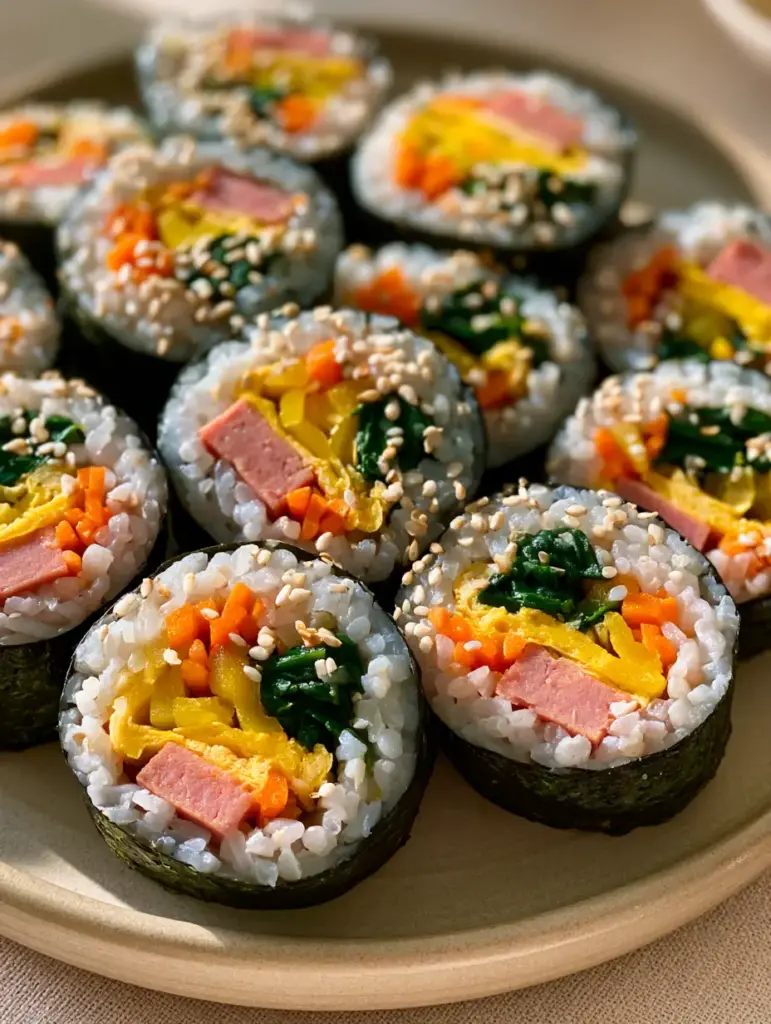
- Vibrant Visual Appeal: A stunning rainbow of julienned carrots, green spinach, and golden egg that looks incredible on any plate.
- Perfectly Seasoned Rice: Learn the secret ratio of toasted sesame oil and salt to make your short-grain rice stand out.
- Satisfying Textures: A delicate balance between the crisp roasted seaweed and the dense, savory core of meat and vegetables.
- Portable & Versatile: The ideal grab-and-go meal that stays fresh and delicious for hours.
If you love the bold flavors of East Asian cuisine, you might also enjoy pairing this with a side of Hibachi Chicken for a full fusion feast!
Essential Ingredients for Authentic Korean Kimbap
To achieve the forensic visual accuracy of a professional roll, you need high-quality ingredients. Each component plays a vital role in the structural integrity and flavor profile of the Korean Kimbap Recipe.
- Roasted Seaweed Sheets (Gim): Use high-quality, thick sheets of seaweed designed specifically for rolling to prevent tearing.
- Short-Grain White Rice: 2 cups (400g) of dry rice. The starch content is essential for the “sticky” factor that holds the roll together.
- Luncheon Meat: 1 can (340g) of luncheon meat (like Spam), cut into long, rectangular strips for a salty, savory punch.
- Carrots: 2 large carrots, finely julienned. These provide a natural sweetness and a bright orange pop.
- Fresh Spinach: 1 bunch (approx. 250g). Blanched and seasoned, this adds the essential earthy green layer.
- Yellow Pickled Radish (Danmuji): These long, bright yellow strips provide the signature “crunch” and acidity that cuts through the savory meat.
- Eggs: 3 large eggs, beaten and fried into a flat omelet before being sliced into golden strips.
- Toasted Sesame Oil: 2 tablespoons (30ml) for seasoning the rice and brushing the finished rolls.
- Toasted White Sesame Seeds: For that final nutty garnish and visual “dusting.”
- Neutral Oil & Salt: For sautéing the carrots and seasoning the spinach and rice.
For more rice-based inspiration, check out our French Onion Soup Rice which uses similar grains for a completely different flavor profile.
Prepping Your Fillings for Maximum Flavor
Step 1: The Foundation – Seasoned Short-Grain Rice
Wash 2 cups (400g) of short-grain rice until the water runs clear. Cook in a rice cooker or stovetop using a 1:1.1 ratio of water. Once cooked, transfer the hot rice to a large bowl. Drizzle with 1 tablespoon (15ml) of toasted sesame oil and ½ teaspoon (3g) of fine sea salt. Gently fold the seasoning into the rice using a slicing motion to avoid mashing the grains. Cover with a damp cloth to keep it moist while it cools to room temperature.
Step 2: Sautéing the Julienne Carrots
Heat 1 teaspoon (5ml) of neutral oil in a skillet over medium heat. Add your finely julienned carrots and a pinch of salt. Sauté for 2-3 minutes until they are tender-crisp and vibrant orange. Do not overcook; you want them to retain their structural integrity within the roll.
Step 3: Blanching the Seasoned Spinach
Bring a pot of water to a boil. Submerge the spinach for exactly 30 seconds until wilted and vibrant green. Immediately plunge into an ice bath. Squeeze out every drop of excess water (this is crucial to prevent a soggy roll). Toss the spinach with a drop of sesame oil and a pinch of salt.
Step 4: The Golden Egg Omelet & Savory Meat
Whisk 3 eggs with a pinch of salt. Pour into a lightly greased non-stick pan to create a thin, flat omelet. Once set, slide it onto a cutting board and cut into ½ inch (1.25cm) wide strips. In the same pan, sear the rectangular slices of luncheon meat until the edges are lightly browned and crispy.
Assembly: How to Roll Like a Pro
Lay one sheet of roasted seaweed on a bamboo rolling mat (or a clean surface). The shiny side should face down. Spread about ¾ cup (approx. 150g) of the seasoned rice over the seaweed, leaving the top 1 inch (2.5cm) bare. Press the rice firmly but gently into a thin, even layer.
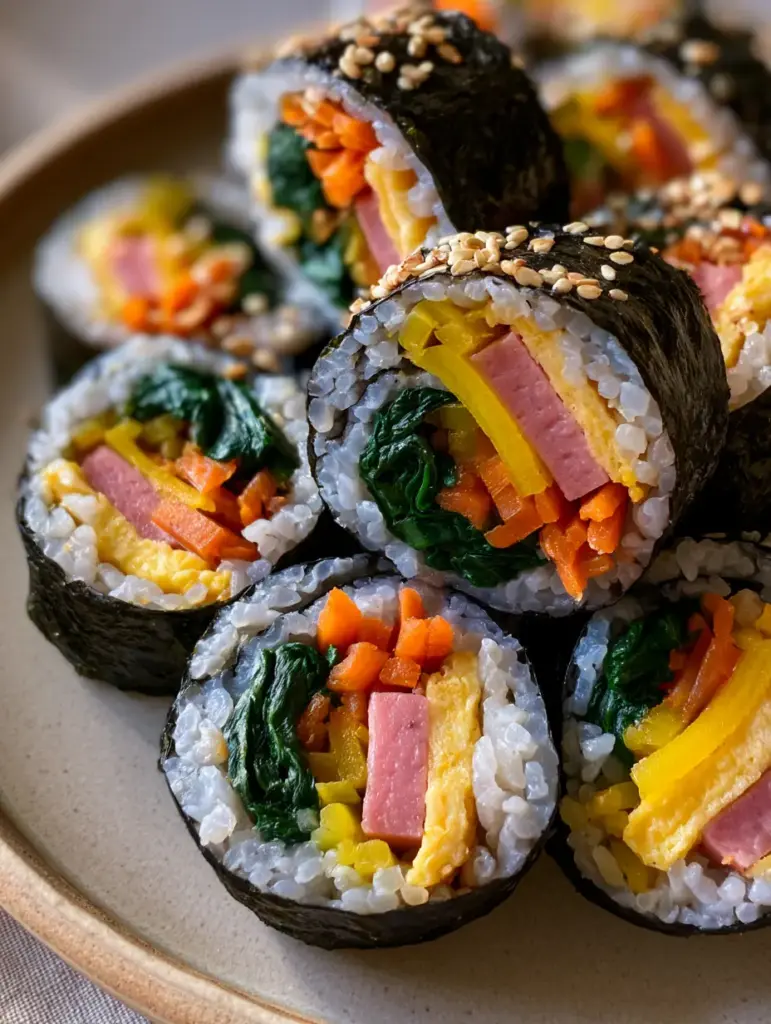
Place your fillings horizontally across the center of the rice: two strips of egg, a generous pile of sautéed carrots, a bundle of spinach, one yellow radish strip, and two strips of luncheon meat. Ensure they are packed tightly together.
Using the mat, lift the bottom of the seaweed and fold it over the fillings. Apply firm pressure to create a tight cylinder. Continue rolling until you reach the bare seaweed strip. Dab a tiny bit of water or a few grains of rice along the edge to seal the roll perfectly.
If you’re looking for more handheld meal ideas for your next gathering, these Turkey Cranberry Sliders are always a hit alongside Asian-inspired sides.
Expert Tips for Success
- Keep Your Knife Wet: When slicing the rolls, use a very sharp knife and wipe it with a damp cloth or a bit of sesame oil between every few cuts. This ensures clean, precise cross-sections.
- Don’t Overfill: It’s tempting to pile on the meat, but too much filling will cause the seaweed to burst. Stick to the ratios mentioned.
- Rice Temperature: Never use piping hot rice on the seaweed, as the steam will make the seaweed chewy and shriveled. Room temperature is perfect.
- Tight Rolling: The secret to the dense core seen in professional photography is the initial “tuck” when you first start rolling.
Storage, Reheating & Freezing
Storage: Kimbap is best enjoyed immediately. If you must store it, wrap the uncut rolls tightly in plastic wrap and keep them at room temperature for up to 4 hours. If refrigerated, the rice will harden.
Reheating: If you have refrigerated kimbap, the best way to revive it is to dip the slices in beaten egg and pan-fry them for 1-2 minutes per side. This turns leftovers into a delicious “Kimbap-jeon.”
Freezing: We do not recommend freezing kimbap, as the vegetables lose their texture and the rice becomes unpleasantly dry upon thawing.
What to Serve With This Korean Kimbap Recipe
Kimbap is a meal in itself, but it pairs beautifully with light, spicy, or crunchy sides. A bowl of spicy ramen or Tteokbokki (spicy rice cakes) is the most traditional pairing, as the kimbap can be dipped into the spicy sauce.
For a lighter option, try a Black Bean Quinoa Salad for added protein and fiber that complements the nutty sesame flavors of the rolls.
Frequently Asked Questions
It is best fresh. If made ahead, keep it whole and tightly wrapped at room temperature. Refrigeration makes the rice hard and less palatable.
Absolutely! Replace the luncheon meat with seasoned fried tofu (inari), burdock root, or extra egg strips for a delicious vegetarian version.
Yes, both use short-grain rice for its stickiness. However, the seasoning is different; kimbap uses sesame oil and salt, while sushi rice uses vinegar and sugar.
Ensure your rice is not too hot and that you don’t overfill the roll. Using a dedicated ‘Gim’ seaweed, which is thicker than snack seaweed, also helps.
This usually happens if the roll isn’t tight enough or if your knife is dull. Use a bamboo mat to apply firm pressure and a very sharp, damp knife for slicing.
The Ultimate Korean Kimbap Recipe
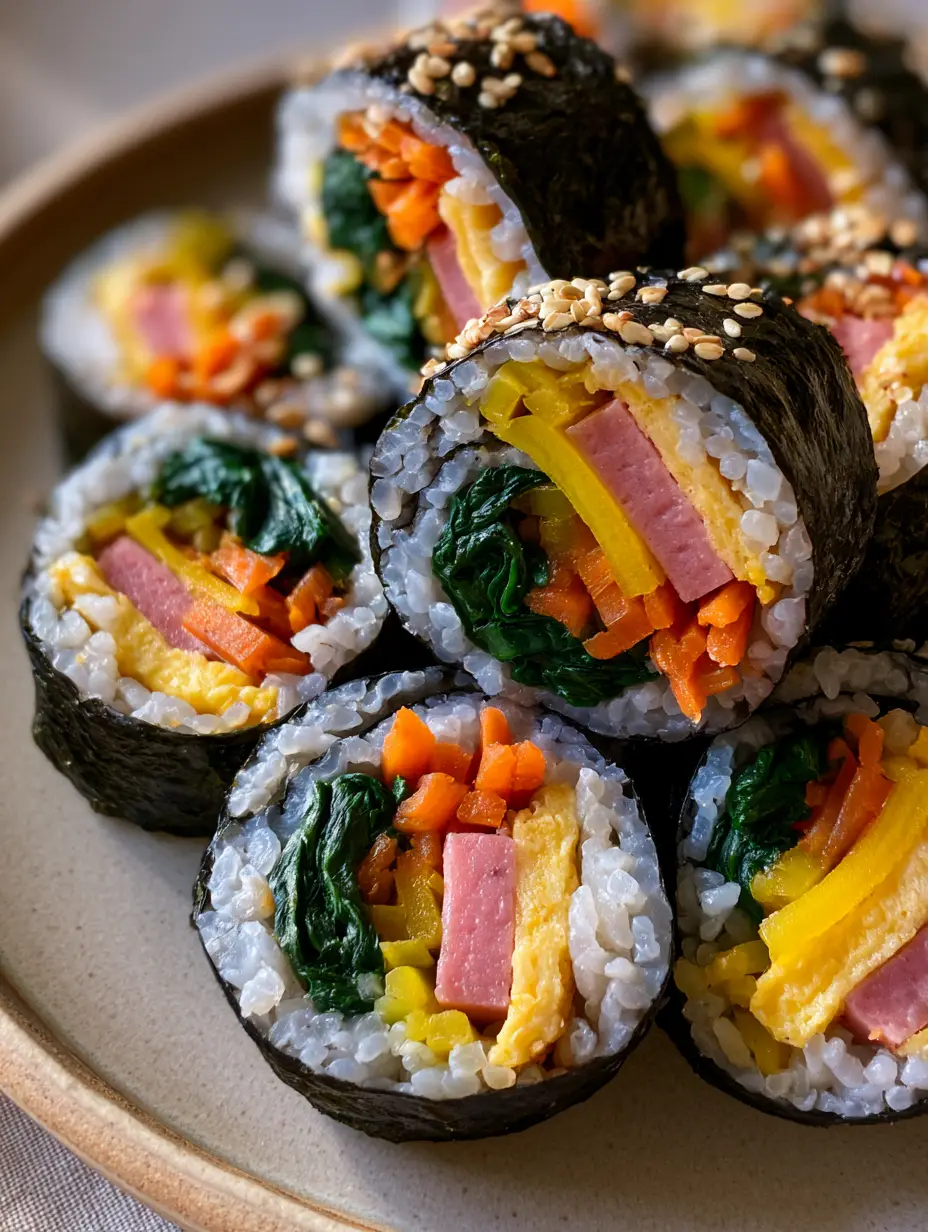
Korean Kimbap Recipe: The Ultimate Guide to Perfect Homemade Seaweed Rice Rolls
Ingredients
Equipment
Method
- Mix cooked warm rice with sesame oil and salt. Cover with a damp cloth.
- Sauté julienned carrots, blanch and squeeze spinach, fry egg omelet, and sear luncheon meat strips.
- Place seaweed shiny side down. Spread rice thinly, leaving 1 inch at the top.
- Arrange radish, meat, egg, carrots, and spinach horizontally across the center.
- Roll tightly using the bamboo mat. Seal the edge with a dab of water.
- Brush with sesame oil, sprinkle with sesame seeds, and slice into even rounds.
Notes
If the rice is too sticky, lightly oil your hands with sesame oil.
Save This Recipe to Pinterest!
Did you love making this Korean Kimbap Recipe? We want to see your beautiful rolls! Pin this recipe to your Korean Food or Lunch Ideas board so you never lose it. Follow leah_chef for more professional-grade recipes that bring the flavors of the world to your kitchen.
Please leave a 5-star rating in the comments below if you enjoyed this guide, and don’t forget to upload a photo of your clean cross-sections! Happy rolling!